Eviction Notice Checker
Check whether an eviction notice may have problems with the form, date, notice period, ground, court route, deposit rules, licensing, fees, disrepair, discrimination or illegal eviction pressure.
Use this checker for: England Section 8 Form 3A, old Section 21 Form 6A, pre-1 May 2026 transition cases, Wales possession notices, Scotland Notice to Leave, Northern Ireland Notice to Quit, social housing notices, court papers, bailiff notices, landlord lockout threats and harassment.
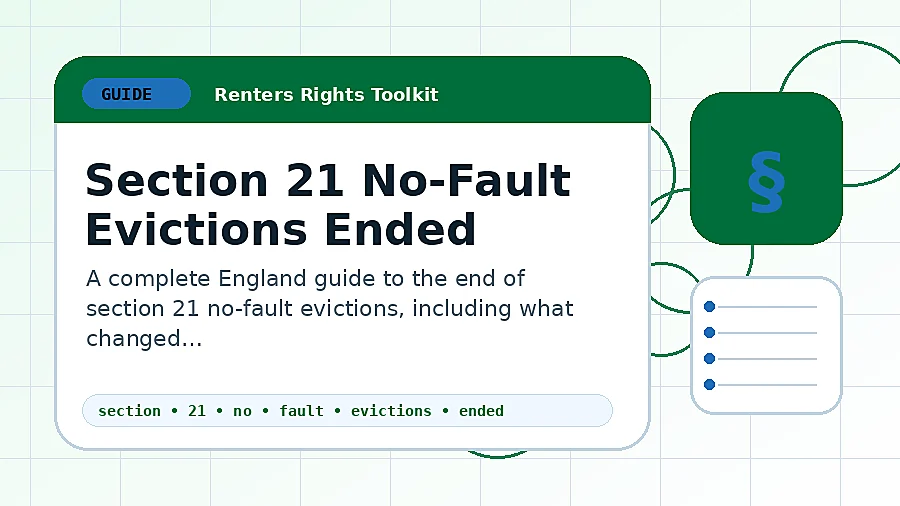
Section 21 was abolished on 1 May 2026, and the transitional deadline for issuing proceedings on an older Section 21 notice passed on 31 July 2026. Any possession claim started now must rely on a Section 8 ground supported by evidence. If a notice you have received is headed “Section 21” or “Form 6A”, that is itself a warning sign worth checking.
Eviction Notice Checker overview
An eviction notice is usually the start of a possession process, not the final step. In most tenancies, a landlord cannot lawfully remove a renter just because a notice date has passed. The landlord normally needs to use the correct notice, wait the correct notice period, apply to court, get a possession order, and then use bailiffs or authorised enforcement officers if the tenant still does not leave.
This tool helps renters and advisers check the practical warning signs: whether the notice was served before or after major law changes, whether the correct country route applies, whether the notice uses the right form, whether the date looks too short, whether the reason is valid, whether the landlord still needs court action, and whether urgent harassment or illegal eviction help is needed.
Eviction Notice Checker: quick route map
Recent eviction law changes and key dates
What the Eviction Notice Checker looks for
- Wrong route: Section 21 used after 1 May 2026 in England private renting, informal threats instead of formal notice, or no court process where one is needed.
- Wrong form: old form, missing form number, missing legal ground, wrong Welsh/Scottish/NI notice route, or informal message treated like a formal eviction.
- Wrong dates: no served date, no expiry date, expiry before legal minimum, backdated notice, court claim started too early or old transitional notice used too late.
- Ground problems: ground not true, rent arrears paid down, Universal Credit delay, landlord selling/moving-in ground inside protected period, unsupported antisocial behaviour claim or discrimination-based ground.
- Section 21 legacy checks: deposit, gas safety, EPC, How to Rent guide, licensing, unlawful fees and improvement notice issues for old England Section 21 notices.
- Urgent risk: bailiff date, court papers, homelessness risk, harassment, illegal lockout, violence, threats or removal without court order.
This checker does not decide whether a court, tribunal or adviser will agree. Eviction is time-sensitive, so get advice quickly if you have court papers, a hearing date, bailiff notice, lockout risk or nowhere safe to go.
Official and advice sources for eviction notices
- GOV.UK — Notices of possession served from 1 May 2026
- GOV.UK — Notices served before 1 May 2026
- GOV.UK — Grounds for possession guidance for tenants
- GOV.UK — Assured tenancy forms
- GOV.UK — Harassment and illegal evictions
- GOV.WALES — Understanding the possession action process
- mygov.scot — Eviction if you have a private residential tenancy
- nidirect — Protection against eviction
- Shelter England — Eviction advice
- Citizens Advice — Eviction
Eviction Notice Checker FAQs
Get clear answers to the most common Eviction Notice Checker questions, including eviction notice UK, Section 8 notice and Section 21 abolished.
Do I have to leave when the notice expires, and how does the Eviction Notice Checker check it?
Usually no. In most tenancies, a notice is only the first step. If you do not leave, the landlord usually needs to apply to court or tribunal, get an order, and then use bailiffs or authorised enforcement. Get advice before leaving if you may need homelessness help.
Pro tip: keep this with the rest of your tenancy paperwork and your notes on Section 8 notice — eviction notices disputes are decided on dates and documents, not on who sounds more reasonable.
Can a landlord use Section 21 in England after 1 May 2026, and how does the Eviction Notice Checker check it?
For most private renters in England, a new Section 21 notice served on or after 1 May 2026 is a major warning sign because no-fault Section 21 notices are no longer available for private rented properties. The landlord normally needs a Section 8 notice with a valid ground.
Pro tip: if you searched “eviction notice checker UK” to get here, this is the part that matters: note the date, who said it and what was actually agreed.
Eviction Notice Checker: what if I got a Section 21 before 1 May 2026?
Old England Section 21 notices need transitional checks. The notice may need at least 2 months, Form 6A, correct documents, deposit compliance, licensing compliance, no relevant council improvement notice, repayment of unlawful fees and court proceedings started within the relevant deadline.
Pro tip: save a dated copy of anything about Form 6A before you reply, so your eviction notices timeline is complete if it is ever challenged.
What is Section 8 / Form 3A — and why does it matter for the Eviction Notice Checker?
For England private rented properties after 1 May 2026, Form 3A is the main notice seeking possession form. It should explain the legal ground or grounds, why the landlord says the ground applies, and the correct notice period before the landlord can apply to court.
Pro tip: pair this with a check on Section 8 notice — the two questions almost always come up together in eviction notices cases.
What if the landlord says they are selling or moving in — what does the Eviction Notice Checker check?
In England after 1 May 2026, sale and landlord/family occupation grounds usually require long notice and cannot normally expire inside the first 12 months of a new tenancy. The exact result depends on the ground, tenancy start date and notice date.
Pro tip: keep the paperwork covering retaliatory eviction in the same file as your tenancy agreement so nothing has to be reconstructed later.
Eviction Notice Checker: what if the notice is about rent arrears?
Check the rent account carefully. For England Ground 8 after 1 May 2026, serious arrears usually need at least 3 months’ rent or 13 weeks’ rent depending on rent frequency, both when notice is served and at the hearing. Other arrears grounds may still be used but can be discretionary.
Pro tip: people often search “eviction notice checker UK” at this point; the safest next step is to confirm Section 8 notice in writing before any deadline passes.
What if the eviction is because of children or benefits, and where does that fit in the Eviction Notice Checker?
That is a serious warning sign for notices served on or after 1 May 2026 in England. Terms banning children or benefits usually cannot be relied on in the same way after the reforms. Use the Benefits & Children Discrimination Checker and get advice quickly.
Pro tip: note the exact date this happened. Under the current England rules, eviction notices outcomes often turn on timing rather than on the wording used.
Can disrepair affect an eviction notice, and does the Eviction Notice Checker flag it?
It can. For older Section 21 notices, council improvement notices and emergency remedial action notices can be very important. For any possession case, disrepair evidence may support a defence, counterclaim, negotiation or council route.
Pro tip: if anything here is disputed, ask for it in writing and keep the reply — written confirmation about Form 6A is worth far more than a phone call.
Eviction Notice Checker: what should I do if I receive court papers?
Do not ignore them. Read the defence form deadline, hearing date and claim details. Get advice urgently. Take the notice, tenancy agreement, rent account, deposit evidence, messages, repair evidence and court papers to an adviser.
Pro tip: check eviction notice UK at the same time; getting both right first time avoids having to redo the whole eviction notices process.
What should I do if I receive a bailiff notice before using the Eviction Notice Checker?
Get urgent advice immediately. A bailiff or enforcement date usually means the case has moved beyond the first notice stage. You may need emergency housing advice, court advice or an application to suspend a warrant depending on the situation.
Pro tip: confirm the position on bailiff warrant against the official source linked on this page rather than relying on a letting agent’s summary.
What if my landlord changes the locks before using the Eviction Notice Checker?
Lock changes, forced exclusion, belongings removed, threats or utility cut-offs can be illegal eviction or harassment. Contact the council’s tenancy relations or private rented housing team and contact police if violence, threats or immediate removal are involved.
Pro tip: searches like “how long is an eviction notice” usually hide a deadline. Diary the date now and keep your evidence of Section 8 notice together.
Eviction Notice Checker: is this checker legal advice?
No. It is a guided issue-spotting tool. Eviction is urgent and technical. Get advice quickly if you have a notice, court papers, bailiff date, homelessness risk, discrimination issue or illegal eviction threat.
Pro tip: if the position on deposit protection defence is unclear, write down what you were told, who told you and when — that record is often decisive.
What is the Eviction Notice Checker and who should use it?
The Eviction Notice Checker is a free, browser-based tool that helps you work through checking an eviction notice without paying for an initial consultation. It is built for renters, landlords, letting agents and advisers who need a fast, plain-English answer on eviction notice UK and related questions such as check eviction notice validity. The Eviction Notice Checker works through the same points an adviser would raise about Section 8 notice and Section 21 abolished, then explains what your answer means and which official source or next step to use.
Pro tip: run the Eviction Notice Checker before you sign, pay or reply to anything, and save the result with your notes on assured periodic tenancy and court possession order.
How does the Eviction Notice Checker work, step by step?
The Eviction Notice Checker works in short, ordered steps. It first asks where the property is and what kind of tenancy is involved, because court possession order changes the answer. It then asks about Section 21 abolished, notice period eviction and the key dates, which is where most check eviction notice validity problems actually begin. Finally the Eviction Notice Checker returns an issue-spotting summary: what looks fine, what looks risky, what is probably not allowed, and which official source or related tool to open next.
Pro tip: have your tenancy agreement, dates and written messages to hand before you start so the Eviction Notice Checker result reflects your real paperwork rather than your memory.
Is the Eviction Notice Checker free to use, and does it store my answers?
Yes. The Eviction Notice Checker is completely free, with no account, no sign-up and no payment. Everything you type into the Eviction Notice Checker stays in your browser: it is not sent to a server, not saved to a database and not shared with a landlord, letting agent or advertiser. That means you can safely test more than one scenario for is my eviction notice valid, notice period eviction or Form 6A without leaving a record anywhere.
Pro tip: because nothing is stored, copy or screenshot your Eviction Notice Checker result before you close the tab if you want it for your evidence file.
How often is the Eviction Notice Checker updated for the current England renting rules?
The Eviction Notice Checker is reviewed against the rules in force and updated whenever the underlying law or official guidance changes. The current version reflects the private renting framework that applies in England after 1 May 2026, including notice served date, prescribed form and deposit protection defence. Changes to the Eviction Notice Checker are checked against primary sources such as legislation and GOV.UK guidance rather than secondary commentary, and the review date is shown at the top of this page.
Pro tip: if your situation started before the current rules, note the exact dates — the Eviction Notice Checker treats older and newer eviction notices situations differently.
What related searches does the Eviction Notice Checker answer, such as “what to do when you get an eviction notice” or “is my eviction notice valid”?
The Eviction Notice Checker is built around the questions people actually type into search, including “what to do when you get an eviction notice”, “is my eviction notice valid”, “eviction notice checker UK” and “how long is an eviction notice”. Behind those different wordings the underlying issue is usually the same: checking an eviction notice. The Eviction Notice Checker also covers the closely related areas — grounds for possession, Section 8 notice and Section 21 abolished — so you do not need to run several separate searches to get one usable answer about eviction notice UK.
Pro tip: if your exact wording is not covered, search this site for check eviction notice validity or is my eviction notice valid and open the linked guide next to your Eviction Notice Checker result.
Can I rely on the Eviction Notice Checker instead of getting legal advice about checking an eviction notice?
No. The Eviction Notice Checker is an issue-spotting tool, not legal advice, and it is not a substitute for a qualified adviser. It tells you what usually applies to checking an eviction notice, which documents matter and which deposit protection defence or retaliatory eviction question to ask next, but it cannot read your full file, argue your case or represent you. If you face a court date, a tribunal deadline, homelessness risk or a serious safety issue, get advice from Shelter, Citizens Advice, a housing solicitor or your local council.
Pro tip: take your Eviction Notice Checker result and your evidence log to the adviser; a clear timeline covering Section 8 notice makes a first appointment far more useful.